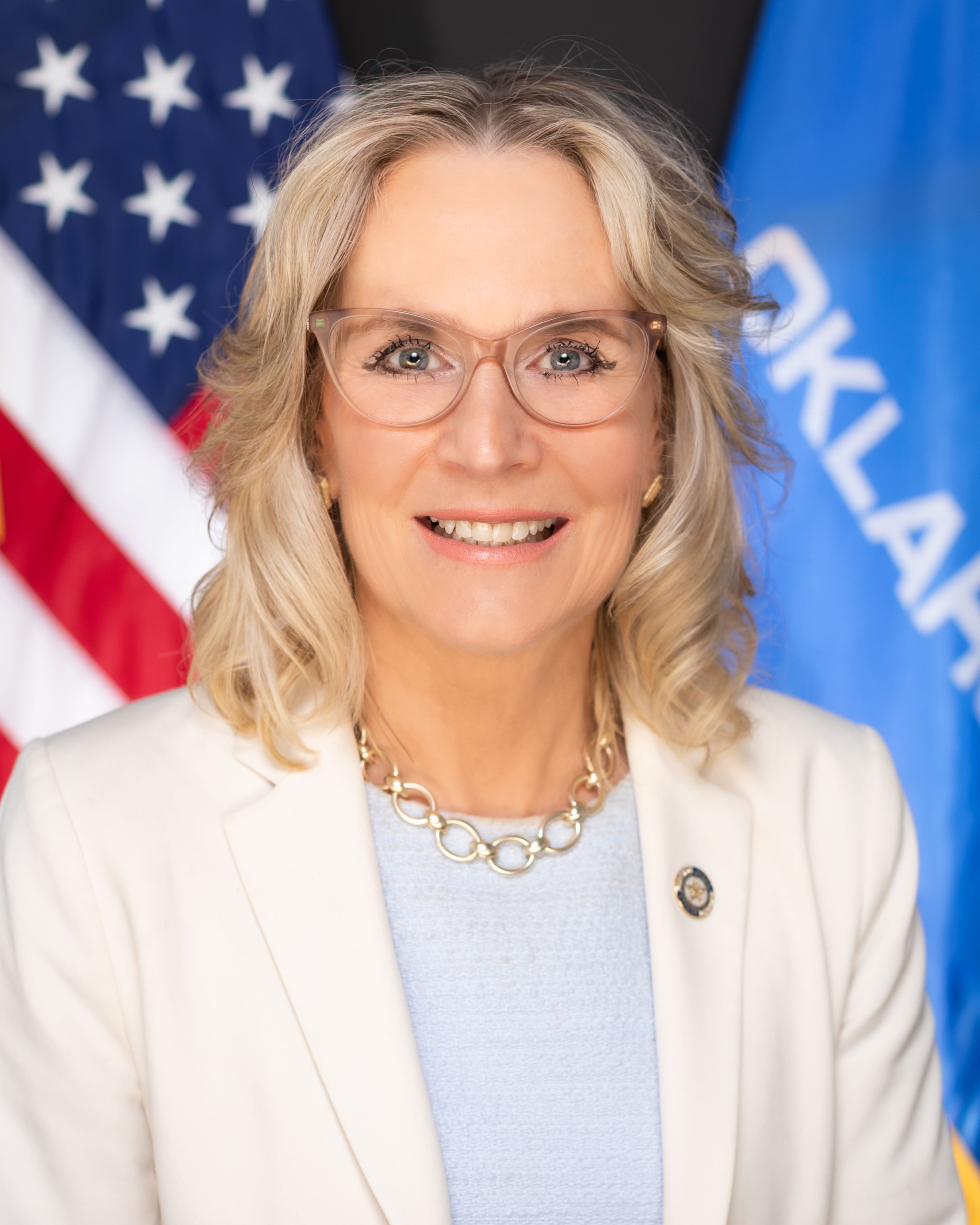
Representative Nicole Miller

Hi, I’m Nicole Miller and I represent the people of Oklahoma’s 82nd District.


representative

Leadership

Assistant Majority Whip

59th Legislature

News & Announcements


Jan 16, 2026
Recent Posts

Miller Files Bill to Protect Veteran Property Tax Exemptions

Rep. Nicole Miller, R-Edmond, has filed a bill that would make it easier for 100% veterans with disabilities and their surviving spouses to maintain property tax exemptions when moving to a new home. While Oklahoma law allows these exemptions to transfer when a veteran relocates, gaps in the current process can cause the exemption to remain with the property instead of following the veteran. As a result, families can temporarily lose the exemption and face unexpected tax bills during the transition. House Bill 4278 would address that issue by directing the Oklahoma Tax Commission to create a standard form for county assessors and treasurers. Veterans with disabilities and their surviving spouses would use the form after a real estate closing to confirm prior eligibility and ensure the exemption carries over to a new homestead. County officials would verify the information and update property assessments accordingly. "Veterans have already given so much in service to our country," Miller said. "This bill would help make sure they don't have to jump through unnecessary hurdles to receive these tax exemptions, that are already existing in law. By solidifying a standardized process, we’re providing certainty and a mechanism that ensure the portability of the benefit stays with the veteran.” The bill would also call for county assessors and treasurers to take steps to send ad valorem tax bills to previous homeowners if exemptions delayed billing. This bill would protect veteran's benefits while reducing administrative delays and confusion in the property tax process. HB4278 is eligible for consideration in the Second Regular Session of the 60th Legislature, which convenes Feb. 2. 


Nov 6, 2025
Recent Posts

Miller, Turner Study OSSAA Rules

OKLAHOMA CITY – Reps. Nicole Miller, R-Edmond, and Tim Turner, R-Kinta, this week held an interim study reviewing Oklahoma Secondary School Activities Association (OSSAA) eligibility and transfer rules as well as usage of school athletic facilities. The study, held before the House Common Education Committee, specifically examined the implementation of OSSAA Rule 24, commonly referred to as the "Link Rule," which is intended to discourage student athletes from changing school districts to follow a trainer and/or coach for athletic purposes. Lawmakers said they wanted to consider the rule in relation to Senate Bill 783 , passed in 2021, which amended provisions of the Education Open Transfer Act. The act governs student mobility and participation in public school extracurricular activity. "We took a close look at how Rule 24 is being applied and whether it reflects the intent of the Open Transfer law," Miller said. "Families make school decisions for many different reasons, and kids should still be able to stay connected to the activities and teams that give them a sense of belonging. We also heard how restrictions on the use of public school fields for camps or training during the school year can create challenges, particularly when they limit opportunities for Oklahoma student athletes to demonstrate their skills and talent. These are real situations for real students. Moving forward, I want to ensure our rules are clear, fair and truly supportive of the opportunities our students work so hard for." Turner said, "Today's study was not a witch hunt but to look at concerns brought to legislators by parents, coaches and citizens about the OSSAA. We want to keep high school sports fun and make sure student athletes are able to better themselves to go to the next level. We want to stay on facts and present evidence gathered by each speaker to help the legislative body determine the way they would like OSSAA to proceed." OSSAA Executive Director David Jackson said the association is not just some outside entity imposing rules on schools. It's an organization created and governed by school administrators who voluntarily join in order to operate on a level playing field in athletic and other competitions. The intent is to keep the focus on education rather than on winning at all costs. The 482 member schools themselves set the rules by which they're governed, and they can change them if necessary. It's also important to note OSSAA oversees about 30 co-curricular activities, including the arts such as vocal and instrumental music, theater, speech and debate, among others. About 150,000 students are served through the organization each year. Jackson said OSSAA's foundational rule of residence eligibility states that a student is eligible to compete only in the school district where the parents reside. If a student transfers to a school outside the district, then they are required to sit out one year from varsity-level participation unless they are given an exception, or what OSSAA would call a hardship waiver. During the first two-and-a-half months of the current school year, OSSAA tracked 1,060 exceptions requested by students transferring out of their district who wanted to be granted eligibility. Jackson said 1,003 of those requests – about 95% - were approved. In recent years, Jackson said member schools of the association determined to allow students 9th grade and above to select whatever school they would like to attend and then be granted one free transfer. He said they are fielding requests, however, from students who are unhappy with the school where they transferred. They either want to transfer back to their original school or onto another school. There are some guardrails and timelines around when transfers can occur, he said. Jackson also addressed the Link Rule. "Schools have always been concerned about students that want to follow a coach that maybe changed jobs. When the exception – the free transfer – came about, they (school administrators) absolutely anticipated that's even going to magnify that issue a great deal more, and they're right about that." Several parents and a student spoke at the meeting as did former Rep. Mark Vancuren, who also previously worked as a coach.  Chris Adamson, a Deer Creek School Board member and the parent of student athletes, spoke about restrictions on high school sports facilities for use by outside entities. His son, who played quarterback, frequently had to attend camps and other events outside of the state to get before college recruiters. Sixty-one events between January and May and not one of them was in Oklahoma, he said. He knows for a fact there have been inquiries about running them in the state, but there have been obstacles to getting these events run on high school campuses. "These are incredibly important exposure and recruiting events," Adamson said. "This impacts Oklahomans to find the best opportunities for college." From a school board perspective, Adamson said there is a lot of lost revenue for schools because of these restrictions. Additional study presenters included Tom George, chief executive officer and founder of QB Impact; Cindy Morey, a parent of a student athlete; Hannah Whitten, an attorney with Whitten Burrage; and Kent Rossander, one of four Glencoe High School students initially deemed ineligible to play after transferring earlier this year. The entire study can be viewed here . 


Oct 30, 2025
Recent Posts

Laws Boosting Key Oklahoma Professions Take Effect Saturday

OKLAHOMA CITY - Two new laws authored by Rep. Nicole Miller, R-Edmond, take effect Saturday, Nov. 1, positioning Oklahoma to better meet the need for skilled professionals who build and serve the state’s communities. House Bill 2260 creates targeted tax incentives to help recruit and retain civil engineers in Oklahoma. The measure offers financial incentives for students pursuing civil engineering degrees and for businesses hiring in the field. “Oklahoma’s civil engineers design, construct and maintain the critical infrastructure at the core of our communities,” Miller said. “With only about 40 percent of engineers graduating from Oklahoma universities remaining in the state after five years, this law invests in our workforce and encourages these talented professionals to stay and build the future of Oklahoma.” Civil engineers design and maintain the infrastructure that supports daily life across the state, including roads, bridges and water systems. Oklahoma has faced a shortage in the field, delaying projects and limiting growth. The new law mirrors successful incentive models used for aerospace engineers to ensure long-term stability in the state’s engineering workforce. House Bill 2261 allows Oklahoma to join the Social Work Licensure Compact, making it easier for out-of-state social workers to practice in Oklahoma without obtaining an additional license. The law helps address the state’s shortage of licensed clinical social workers, which currently meets only about 67% of the statewide need. “When families are in crisis, they shouldn’t have to wait for help,” Miller said. “By opening our doors to qualified social workers from other states, we’re ensuring Oklahomans can access the care and support they need when it matters most.” By joining the compact, Oklahoma gains access to a national pool of approximately 500,000 social workers across 22 participating states including Kansas, Missouri, Colorado and Louisiana. The compact ensures regulators can continue sharing investigative records and disciplinary information to uphold accountability. Both laws take effect Saturday, Nov. 1.