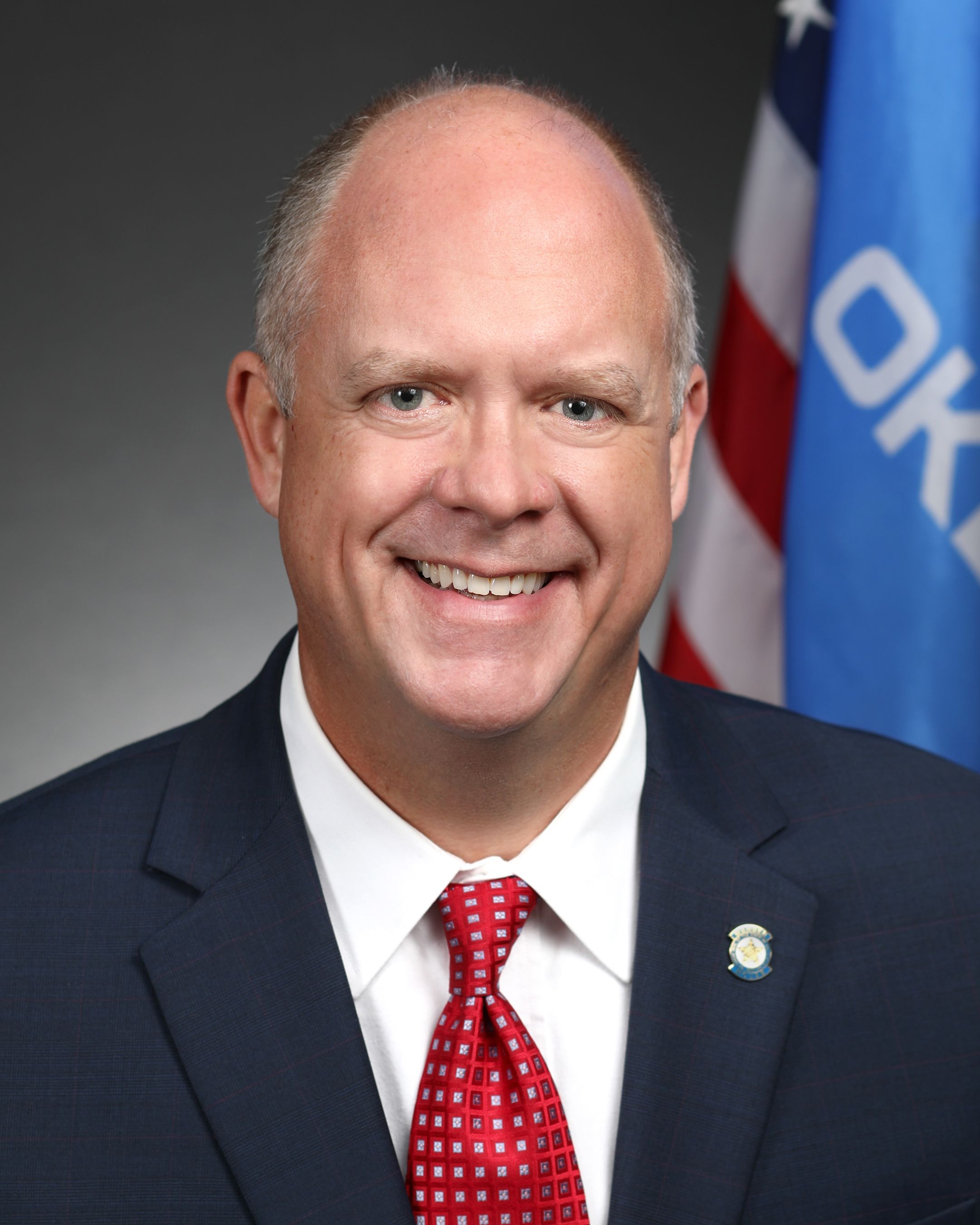

Strom's Eight-Bill Package Addressing Government Spending Oversight Signed into Law
OKLAHOMA CITY – A bipartisan package of eight bills authored by Rep. Judd Strom, R-Copan, that will increase transparency in public contracts and prevent misuse of taxpayer dollars has been signed into law. The legislative package of bills was developed following concerns about gaps in government spending oversight and after an audit by State Auditor & Inspector Cindy Byrd identified $93.4 million in misspent expenditures. Strom, who serves as the Chairman of the House General Government Appropriations and Budget Committee, worked alongside lawmakers from both parties during the 2025 interim to identify ways to prevent similar issues from happening again. Other lawmakers included Rep. Gerrid Kendrix, R-Altus; Rep. Denise Crosswhite-Hader, R-Piedmont; Rep. Mike Dobrinski, R-Okeene; Rep. Preston Stinson, R-Edmond; and Rep. Andy Fugate, D-Oklahoma City. "I brought in lawmakers and from all over the State and political spectrum to work on this project. We all agreed that the people we serve deserve to be confident in the idea that their investment in this State is being handled responsibly," Strom said. "This was a heavy lift, but I appreciate the long hours and hard work that each member put in. I also appreciate the time and effort that the Auditor and her staff lent to us. We went back over years of documented waste, fraud, and abuse of taxpayer dollars and asked, ‘What would have prevented this? What can we put in place to make sure this never happens again?" Governor Kevin Stitt signed all eight bills into law and said transparency is important to Oklahomans. "As governor, I have fought for transparency and accountability for Oklahoma taxpayers. The transparency laws passed this session further that goal," Stitt said. "Government works for the people, not the other way around, and these reforms help preserve the trust Oklahomans have in their state and local institutions." The legislation focuses on increasing transparency in state contracting, adding more safeguards to the procurement process, improving documentation requirements and helping prevent conflicts of interest and misuse of public funds. "Too often, lawmakers and taxpayers are left finding out after the fact that millions of dollars were mishandled or poorly tracked," Strom said. "These new laws put stronger safeguards in place on the front end so contract details are easier to access, and the public can better see where their money is going." The package also includes reforms related to government bidding practices. Lawmakers said the measures are intended to create a more transparent and competitive process while discouraging favoritism and poor-quality contracting. "This legislation helps eliminate the good-old-boy system by creating fairness in contracting," Strom said. "The honest contractors doing things the right way should not have to compete against bad actors benefiting from weak oversight." The new laws included in the package are: House Bill 3413 by Strom and Sen. Tom Woods, R-Westville, expands transparency in state agency contracting by requiring agencies to publicly list contractors, contract values and project status while disclosing consultant reports and staffing-related contracts. House Bill 3414 by Strom and Sen. Bill Coleman, R-Ponca City, directs the Office of Management and Enterprise Services to improve accounting systems related to service contracts, staff augmentation and documentation for digital and intangible assets. House Bill 3415 by Strom and Sen. Julie Daniels, R-Bartlesville, requires vendors to disclose subcontractors, tightens documentation standards, mandates post-project reviews and creates a public database of state contracts. House Bill 3418 also by Strom and Daniels updates the Public Competitive Bidding Act to refine procedures for public construction projects and ensure more consistent bidding practices, and criminalizes violations of the Central Purchasing Act. This law will take effect Nov. 1, 2027. House Bill 3416 by Strom and Sen. Jerry Alvord, R-Wilson, allows counties to seek quotes for certain smaller purchases while maintaining documentation and oversight safeguards. House Bill 3417 also by Strom and Alvord authorizes certain political subdivisions and public trusts to use real-time reverse auction bidding procedures for goods and services purchases. House Bill 3419 by Strom and Sen. Jack Stewart, R-Yukon, tightens ethics laws by making it a felony for officials, employees or contractors to use confidential government information for personal financial gain. House Bill 3420 by Strom and Sen. Carrie Hicks, D-Oklahoma City, tightens oversight requirements for negotiated contracts and requires additional public reporting of procurement activity. All measures take effect Nov. 1, except for HB3418, which takes effect Nov. 1, 2027.